
By Alexander Angeloff, founder of TranscenDental. Educational content, not a substitute for a dental exam.
Short answer: yes, remineralizing toothpaste works, within limits. It can strengthen enamel that has started to lose minerals, reduce sensitivity and help early white-spot lesions. It cannot fill a cavity that has already formed a hole. Knowing the difference is how you pick the right product and set the right expectations.

What I brush with every day
What remineralization actually is
Your enamel is constantly losing and regaining minerals. Every time you eat sugar or starch, plaque bacteria produce acid that pulls calcium and phosphate out of the enamel surface (demineralization). Between meals, saliva neutralizes that acid and redeposits minerals (remineralization).
Cavities form when the balance tips toward loss for long enough. A remineralizing toothpaste tips it back by delivering minerals to the tooth surface and making the mouth less acidic.
Does remineralizing toothpaste work?
For the right problems, yes:
- Early enamel damage and white spots. Chalky white spots are areas where minerals have been lost but the surface is still intact. These can harden again and, in many cases, become less visible.
- Sensitivity. Remineralizing ingredients can seal the tiny tubules in exposed dentin that carry cold and touch signals to the nerve.
- Prevention. Strengthening enamel daily makes new decay less likely.
What it can't do:
- Fill a cavity. Once decay has broken through the enamel into a hole, it needs a dentist.
- Grow new enamel. Enamel has no living cells, so lost thickness doesn't regrow. Remineralization repairs the mineral content of what's there. More in can toothpaste rebuild enamel?
Which ingredients remineralize enamel
| Ingredient | How it works | Evidence |
|---|---|---|
| Fluoride | Helps form fluorapatite, a more acid-resistant mineral | Strong; the long-standing standard |
| Nano-hydroxyapatite | The same mineral your enamel is made of; deposits directly on the surface and in early lesions | Strong and growing. An 18-month randomized trial in adults found hydroxyapatite toothpaste was not inferior to fluoride for preventing cavities. |
| Calcium phosphate systems (CPP-ACP, bioactive glass) | Release calcium and phosphate ions | Moderate |
| Theobromine | A cacao compound studied for increasing enamel hardness | Early; mostly lab studies. See theobromine toothpaste. |
| Xylitol | Doesn't remineralize directly, but reduces acid-producing bacteria | Supportive |
| Baking soda | Raises mouth pH so remineralization can happen | Supportive |
If you want a fluoride-free remineralizing toothpaste, nano-hydroxyapatite is the ingredient with the best evidence. For a full breakdown, read nano-hydroxyapatite toothpaste: benefits and safety.
What I brush with every day
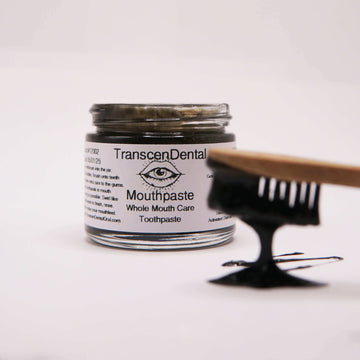
10% nano-hydroxyapatite, organic birch xylitol and 2% theobromine in a probiotic herbal ferment. No fluoride, SLS or glycerin.
What results to expect, and how long they take
- Smoothness and shine: often within the first week or two, as hydroxyapatite fills microscopic surface roughness.
- Sensitivity: many people notice less sensitivity within two to four weeks of twice-daily use.
- White spots: slower, typically several months, and results vary with how deep the spots are.
- Cavity prevention: invisible day to day; it shows up as fewer problems at checkups over time.
Be skeptical of dramatic "before and after" photos. Lighting, angle and a professional cleaning can explain much of the difference.
How to choose the best natural remineralizing toothpaste
- Check the concentration. Hydroxyapatite works best at meaningful levels. Many studies use around 10%. Some products include a trace amount for the label.
- Look at what's around it. Glycerin-heavy bases may coat teeth; it's a debated point, but if you're paying for minerals, a base built around actives makes sense.
- Skip SLS if you have sensitive gums or mouth ulcers.
- Prefer low abrasion, since you're trying to protect enamel, not polish it away.
- Look for supporting ingredients like xylitol and pH-balancing minerals.

TranscenDental is a fluoride-free remineralizing toothpaste with 10% dual-particle nano-hydroxyapatite (60nm particles for early lesions, 200nm for the surface), 2% theobromine, organic birch xylitol and baking soda, in a probiotic herbal ferment with no SLS and no glycerin. It also includes ingredients for gum health, because enamel and gums break down together.
How to use any remineralizing toothpaste: brush twice a day for two minutes, spit but don't rinse right away, and avoid eating or drinking for about 30 minutes afterward so the minerals stay in contact with your teeth.
Build the full routine: brush with TranscenDental toothpaste, clean between your teeth with our plastic-free bamboo floss, and finish after meals with an Ora Flora xylitol mint (about 3 g of organic birch xylitol each, no gum base or artificial sweeteners). Or get all three together in the Oral Care Trio and save $12.
Frequently asked questions
Can remineralizing toothpaste heal cavities?
It can help reverse the earliest stage of decay, when enamel has lost minerals but has no hole. Once there's a cavity, you need a filling.
How long does remineralizing toothpaste take to work?
Smoothness can improve within a week or two and sensitivity often within two to four weeks. White spots take months.
Is remineralizing toothpaste safe?
Hydroxyapatite is the same mineral as your teeth and is considered safe, including if small amounts are swallowed. See our guide on nano-hydroxyapatite safety.
Is remineralizing toothpaste good for translucent teeth?
Translucent edges usually mean enamel is thin. Remineralizing toothpaste can strengthen what's left and reduce sensitivity, but it won't add back lost thickness. Ask your dentist about the cause, which is often acid erosion.
What is the best fluoride-free remineralizing toothpaste?
Look for nano-hydroxyapatite at around 10%, no SLS, low abrasion and supporting ingredients like xylitol. That's how TranscenDental is made.
What I brush with every day
10% nano-hydroxyapatite, organic birch xylitol and 2% theobromine in a probiotic herbal ferment. No fluoride, SLS or glycerin.


